How Catalogue Credit Works: A Simple Guide to Buying on Account
How catalogue credit works can seem confusing if you have never used a shopping account before. In simple terms, catalogue credit can let you buy goods and pay for them over an agreed period instead of paying the full price at once.
Different catalogue providers offer different types of credit. The repayment period, interest rate, credit checks and other conditions can all vary. Some providers may also require payments before goods are dispatched.
This guide explains the basics. It covers how catalogue accounts work, affordability checks, repayments, possible costs and the risks of borrowing.
Important: BuyNowPayLaterCatalogue.co.uk is an independent information and referral website. We are not a lender and do not provide credit. Credit products, eligibility rules, costs and terms vary between providers. Always check the provider’s current terms before entering into a credit agreement.
What Is Catalogue Credit?
Catalogue credit is a way of buying goods and paying for them over time. It may also be called a shopping account or mail-order account.
Instead of paying the full purchase price at checkout, you agree to make payments under the terms offered by the credit provider.
MoneyHelper explains that catalogue credit can involve weekly or monthly instalments. The exact repayment period will depend on the provider and agreement.
Modern catalogue shopping does not always involve a printed catalogue. Many catalogue businesses now operate online. You may browse products on a website, create an account and apply for a payment option online.
Catalogue credit can be used for products such as furniture, electrical goods, appliances, beds and technology. The products available will depend on the retailer.
How Catalogue Credit Works When You Apply
Understanding how catalogue credit works starts with the application process.
You will usually need to create an account and provide personal information. The information requested will vary between providers.
A provider may need details that help it confirm your identity. It may also ask for information about your financial circumstances.
The provider will then decide whether it is prepared to offer credit. Depending on the type of agreement, this can involve checks of your creditworthiness and affordability.
Being able to apply does not mean you will be accepted. It also does not mean every applicant will receive the same terms.
Your circumstances may affect the credit available to you. Providers can use different assessment methods, so an outcome from one company does not guarantee the same outcome elsewhere.
What Is Creditworthiness?
Creditworthiness is broadly about the risk involved in lending money to someone.
A lender may consider information about how you have managed credit in the past. It may also use information supplied during your application.
For regulated consumer credit, FCA rules require a reasonable creditworthiness assessment before a lender enters into a regulated credit agreement.
This assessment considers more than whether a lender thinks it will get its money back. Affordability risk is also important.
What Does Affordability Mean?
Affordability looks at whether repayments can be made without causing financial problems.
For regulated agreements covered by the relevant FCA rules, a lender must consider whether repayments can be made as they fall due. It must also consider whether repayments could have a significant negative effect on the customer’s finances.
The FCA also says the assessment should consider whether repayments can be made without having to borrow more money to meet them.
This does not mean every lender must use exactly the same affordability process. The checks can vary according to the agreement and the circumstances.
You should also make your own assessment of affordability. A lender accepting an application does not remove the need to check your personal budget.
How Do Catalogue Credit Payments Work?
Once you enter into an agreement, you will normally have a payment schedule or other repayment terms to follow.
Payments might be weekly, monthly or arranged in another way. This depends on the credit product.
Before agreeing, check:
- how much each payment will be;
- how often payments are due;
- how long the agreement lasts;
- the total amount you will pay;
- whether interest or other charges apply;
- whether any payments are needed before dispatch; and
- what may happen if you pay late or miss a payment.
Do not judge affordability only by the size of an individual weekly or monthly payment.
A smaller regular payment can look easier to manage. However, you should still consider the total cost and how long you will be making payments.
Does Catalogue Credit Charge Interest?
There is no single interest rate that applies to catalogue credit.
Some agreements may offer interest-free borrowing. Others may charge interest. Certain offers may only remain interest-free if you repay the balance within a set period.
This is why it is important to read the individual agreement rather than assuming all catalogue accounts work in the same way.
Check the APR where one applies. You should also look at the total amount payable and any other charges.
Even 0% interest does not automatically make borrowing affordable.
If you cannot comfortably make the repayments, taking on the commitment could still create financial problems.
How Catalogue Credit Works With Credit Checks
Credit checks can form part of a catalogue credit application, but providers do not all use them in the same way.
A provider might perform a soft credit search. Another application or stage of the process may involve a hard search.
A soft search generally does not affect your credit score in the same way as a hard application search. You should check what type of search a provider intends to carry out before applying.
It is also important not to confuse a credit check with an affordability assessment.
They can be related, but they are not necessarily the same thing.
The FCA does not require regulated lenders to use one identical method for every creditworthiness assessment. The information and checks needed can depend on factors such as the type and amount of credit and the customer’s financial position.
Our separate guide to soft credit checks explains this in more detail.
Can Catalogue Providers Require Pre-Payments?
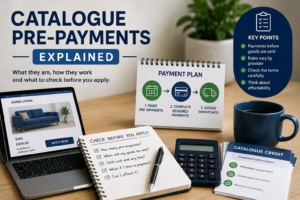
Some catalogue arrangements may require payments before goods are dispatched.
These are sometimes described as pre-payments.
The way they work depends on the provider. You should not assume that every catalogue requires them or that every customer will have the same requirements.
If a provider requires pre-payments, check how many may be needed and when the goods are expected to be dispatched.
You should also understand what happens to money already paid if you cancel, if an order cannot be fulfilled or if another problem occurs.
Read the provider’s current terms rather than relying on another customer’s experience.
We explain this subject further in our catalogue pre-payments guide.
Benefits of Understanding How Catalogue Credit Works
Catalogue credit can offer flexibility, but that does not mean it is suitable for everyone.
A possible benefit is that you may be able to spread the cost of a purchase rather than paying the full amount at once.
This could make budgeting for some larger purchases easier when the repayments are affordable.
Some providers may also offer interest-free payment options. Where this applies, it can reduce the cost of borrowing compared with credit that charges interest.
There can also be convenience in keeping purchases and payments within one shopping account.
However, these benefits need to be considered alongside the risks.
What Are the Risks of Catalogue Credit?
The main risk is taking on repayments that later become difficult to afford.
Your financial circumstances can change. Income can fall, while rent, energy, food or other essential costs can rise.
A payment that feels manageable today might become harder to meet later.
Missing payments may also lead to consequences under your agreement. Depending on the product and circumstances, this could include charges, collection activity or information being recorded with credit reference agencies.
This could make future borrowing more difficult or expensive.
Another risk is focusing on the regular payment instead of the full purchase price.
For example, a weekly figure may look small in isolation. The more useful comparison is often the total amount payable for the product.
Compare that figure with the price of buying the same or a similar item elsewhere.
How Catalogue Credit Works When You Have More Than One Account
Having several payment plans at the same time can make budgeting harder.
Each individual payment may appear affordable. The combined total may be much larger.
Before taking additional credit, list your existing commitments.
Include credit cards, loans, overdrafts, catalogue accounts and other payment plans. Then add essential household spending.
Think about what would happen if an unexpected bill arrived.
If making the new payment would leave little room for essential spending or emergencies, more borrowing may not be appropriate.
What Should You Check Before Using Catalogue Credit?
Understanding how catalogue credit works means looking beyond the product you want to buy.
Start with the agreement itself.
Check the total price of the goods and the total amount payable under the agreement. Find out whether interest or charges apply.
Look at the repayment frequency and agreement length.
You should also understand the provider’s delivery rules. This is particularly important if payments may be required before dispatch.
Check what happens if you miss a payment. Read the cancellation and returns information too.
Finally, consider whether you could buy the product in another way.
Alternatives to Catalogue Credit
You do not have to use credit simply because a payment plan is available.
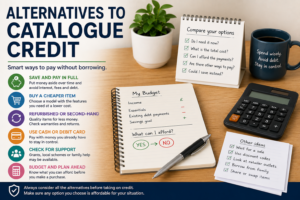
One alternative is to wait and save for the item. This avoids adding another repayment commitment to your budget.
You could also compare lower-cost products.
For some purchases, a refurbished or second-hand product may be suitable. Check the condition, warranty and seller before buying.
If you already have savings, you could consider whether using some of them is appropriate. However, keeping money available for emergencies can also be important.
Other forms of credit exist, but they come with their own costs and risks. Compare the total amount repayable rather than looking only at the headline rate or monthly payment.
Our alternatives to catalogue credit guide explores these options in more detail.
What Happens If You Cannot Make a Catalogue Payment?
Do not ignore a payment problem.
Check your agreement and contact the provider if you think you may struggle to pay. Asking for help early can give you more time to understand your options.
Do not automatically take out more credit to cover an existing payment. That can increase your overall debt and may make the problem harder to manage.
If you are struggling with debt or household bills, free independent support is available.
MoneyHelper, Citizens Advice and StepChange provide information and support.
You can also read our guide to what happens if you miss catalogue payments.
Frequently Asked Questions About How Catalogue Credit Works
Is catalogue credit the same as a normal loan?
Not necessarily. Catalogue credit is generally linked to buying goods through a retailer or shopping account. A personal loan normally provides money that can be used more broadly. The terms, protections, interest and repayment structure can differ.
Does every catalogue offer the same payment plans?
No. Payment plans vary between providers. A provider may also offer different terms to different customers, depending on the product and individual circumstances.
Will I be accepted for catalogue credit?
There is no guarantee of acceptance. Providers can apply eligibility, creditworthiness and affordability criteria. An application may be declined.
Does catalogue credit always involve a credit check?
Do not assume every provider follows the same process. Credit checking practices can depend on the provider and type of agreement. Check the application information before proceeding.
Is interest-free catalogue credit risk-free?
No. A 0% interest rate removes interest from the agreement where the terms are met, but you still have a repayment commitment. Missing payments can have consequences.
Can catalogue credit affect my credit score?
It may. The effect can depend on the type of credit search, whether the account is reported to credit reference agencies and how the account is managed. Our catalogue credit and credit score guide covers this separately.
How Catalogue Credit Works: The Key Points
Catalogue credit can let you buy products and spread the cost instead of paying the full price immediately.
However, there is no single catalogue credit model.
Interest rates, repayment periods, credit checks, affordability processes and delivery conditions can differ between providers.
Before entering into an agreement, check the total amount payable. Understand the payment schedule and any interest or charges.
Check when your goods will be dispatched and whether any conditions apply first.
Most importantly, consider whether the repayments are affordable alongside your essential spending and existing commitments.
If you want to learn more, visit our Buy Now Pay Later Catalogue information hub for more guides about catalogue credit and ways to spread the cost.
Editorial information: This guide provides general information about catalogue credit in the UK. It is not personal financial advice. Credit products and provider terms can change. Check the current terms of any agreement before applying.
Last reviewed: August 2026.